

At Fabulous Paw
A safe, home-style place where dogs can learn, play, socialize, and feel at home.
Located in North Vancouver, Fabulous Paw brings professional dog training and personalized dog care together in a comfortable, home-style environment.
Whether you need care for just a few hours, Doggy Daycare while you’re at work, Overnight Boarding while you travel, or professional training for your dog, we’re here to give you peace of mind while your dog enjoys a safe, supervised, and positive experience.
Our services include Private Dog Training, Puppy Training & Socialization, Doggy Daycare, Overnight Boarding, and Board & Train.
Open 365 days a year, including weekends and holidays.
At Fabulous Paw, dogs don’t just stay with us, they become part of our pack.
Training
Does your dog have housetraining mishaps, does he go crazy whenever a skateboarder goes by or does he growl at strangers? We can help. We are well equipped to deal with any issue in a safe and humane manner and we do this in the comfort of your own home.
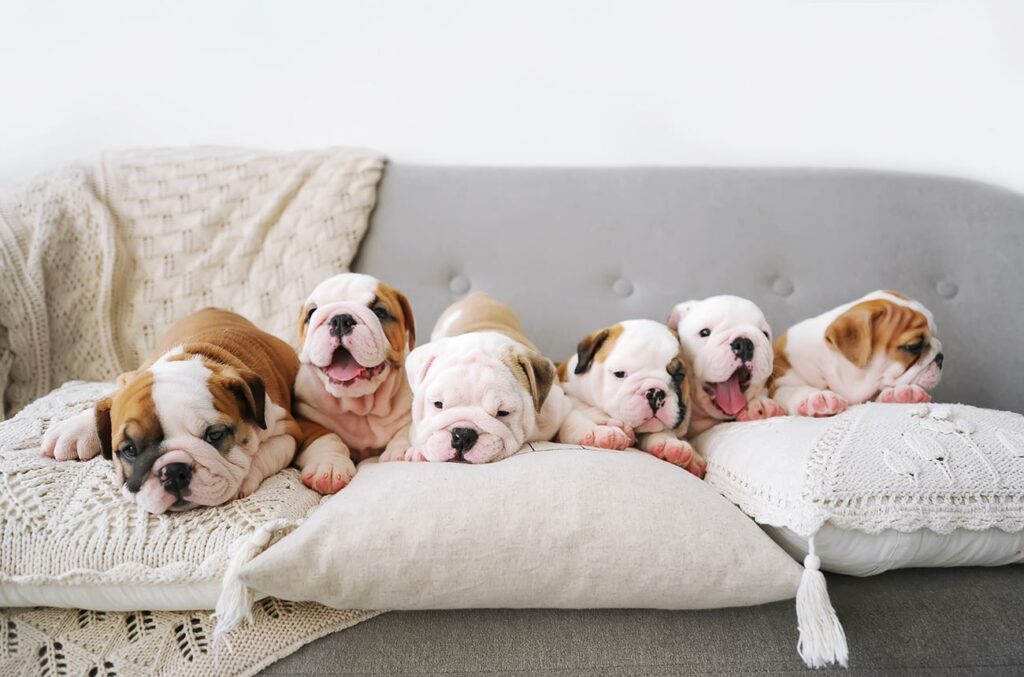
Helping You and Your Puppy Start Off Right
Puppy classes are an ideal way to socialize your puppy to other dogs and people in a safe and controlled environment. Our classes teach you how to raise a confident, happy dog with a focus on fear prevention. They will be fun for both you and your dog.
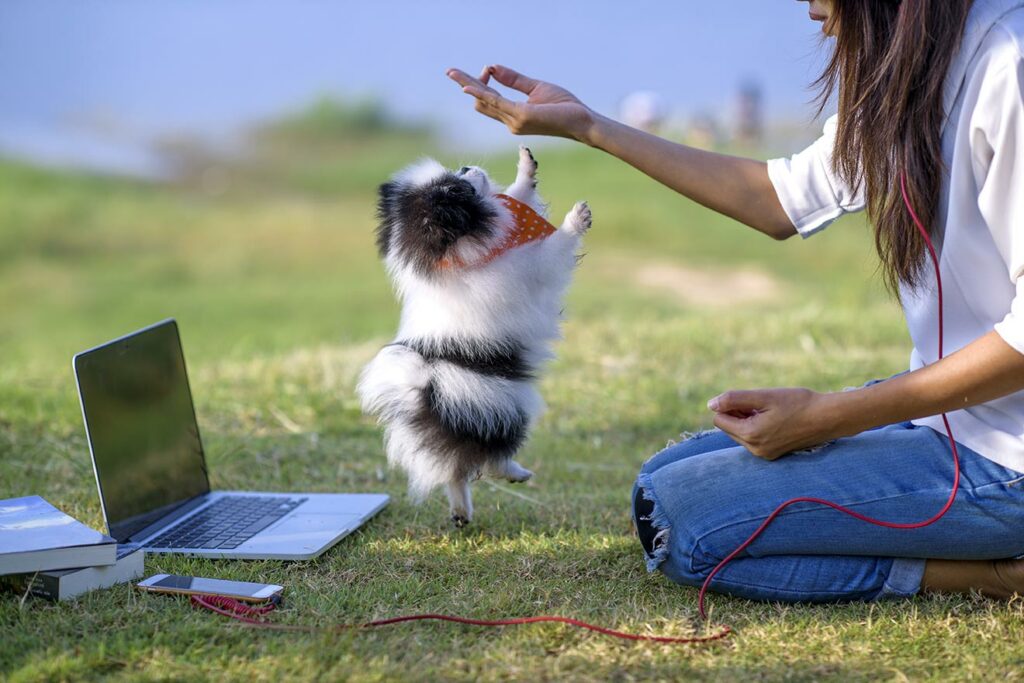
Finding the Right Dog for the Right Family
Are you having a hard time finding a trainer in your area or do you live outside of our service area? A Skype consultation may be the solution you are looking for.
Training
Training where everyday life happens.
For some dogs, training in their own home environment — the space they recognize as their territory — can be especially helpful. It gives us the opportunity to observe how your dog behaves and responds in their own familiar space, and to work directly on the situations and behaviors that are part of everyday life.
This can be especially useful for dogs who become more protective or territorial at home, bark at visitors or sounds outside, react at the door,
ignore familiar commands or show behaviors at home that may not appear in a different environment.
In-Home Training is also about teaching you how to work with your dog. You’ll learn when to be clear and consistent, when and how to reward, how to use your voice and timing effectively, and how to calmly stop or redirect unwanted behaviors.
Between sessions, you’ll have time to practice what we’ve worked on together, helping your dog learn through consistency and giving you more confidence in handling everyday situations.
The goal is better communication and a better understanding between you and your dog.
Helping You and Your Puppy Start Off Right
Bringing a new puppy home is the beginning of a beautiful journey, but it also comes with many questions and challenges.
For many families, this is their first puppy, and it’s completely normal to feel unsure about what to do. In fact, I often recommend that puppy training begin before your puppy even comes home. Preparing the family in advance can make those first days much easier. Everyone can learn what to expect, what should be ready at home, and how to follow the same routine and approach from the very beginning — so the whole family is prepared to welcome their new furry family member.
House training, puppy biting and chewing, crying during the first nights, settling into a new routine, and learning how to sleep comfortably in a new home are some of the most common challenges new puppy owners face.
New puppy owners often have so many questions all at once: How much should my puppy eat and how often? What kind of food is appropriate? Which foods can be harmful? Can I share any of my own food with my puppy? Can I change the food my puppy has been eating? When and how should I give my puppy a bath? How do I trim their nails or brush their coat? When should the first grooming appointment be? Do I need to clean my puppy after they go to the bathroom? Where should my puppy sleep?
These are just some of the questions that can suddenly come to mind when a new puppy joins the family. Having so many questions at once can feel overwhelming and stressful, especially for a first-time puppy owner. Having someone experienced to guide you through those first days can make a big difference.
Through in-person or phone consultations, I help you understand what to expect and guide you through these important first days with more confidence and less stress.
One of the most important parts of puppy training is helping the entire family follow the same plan. Today, it’s easy to find all kinds of advice on social media, or to receive well-meaning suggestions from friends and other dog owners based on what worked for their own dogs.
But every dog is different. Breed, age, personality, confidence level, previous experiences, and home environment can all make a difference. Something that worked very well for one dog may not be the right approach for another puppy — and in some cases, it may even create a new problem.
That’s why I believe puppy training should be based on the individual puppy and the family they live with, rather than simply following the same advice for every dog.
Together, we create one clear and consistent routine for house training, sleep, boundaries, rewards, basic commands, and early socialization, based on your puppy’s individual needs and your family’s lifestyle, so your puppy can learn in a calm and positive way.
For families who need extra support, we can also create a private family WhatsApp group, where everyone can ask questions as they come up and receive guidance between training sessions.
My goal is to be by your side during this sweet but challenging beginning, so you and your puppy can start your life together with confidence, consistency, and as little stress as possible.
Finding the Right Dog for the Right Family
Finding the right dog starts long before bringing one home.
Choosing a dog is about much more than simply liking the look of a particular breed. After many years of living and working with dogs of different breeds, sizes, personalities, temperaments, and energy levels, I have learned how important it is to look at the whole picture before bringing a dog into a family.
The first question is not always, “Which breed should I choose?” Sometimes the more important question is, “Is a dog the right pet for my family and my lifestyle at this time?”
Every family is different. Before recommending a breed, I take the time to understand the family’s lifestyle and circumstances: the ages of family members, whether there are children, seniors, or someone with special needs in the home, allergies, previous experience with dogs, work schedules, activity level, how much time the family can realistically spend with a dog, how long the dog may need to stay home alone, the living space, and what they expect from their future companion.
Previous experience with dogs can also be especially important when considering certain breeds, particularly guardian and protective breeds.
Sometimes my recommendation may be the breed the family already has in mind. Sometimes I may recommend a completely different breed that I believe would be a better fit. And sometimes, after considering the family’s circumstances, I may suggest that a dog may not be the best choice for them at that time — and that another pet, such as a cat, might fit their lifestyle better.
But finding the right breed is only the first step.
Even when a particular breed is a great match for a family, that does not mean that every puppy of that breed — or even every puppy from the same litter — will be the right match for that family.
Every puppy is an individual. Their energy level, confidence, temperament, personality, and the way they interact with people and respond to their surroundings can be very different. These differences need to be considered carefully alongside the family’s own personality, lifestyle, activity level, experience, home environment, and expectations.
That is why I believe choosing the individual puppy can be just as important as choosing the right breed.
When it is time to meet and choose your puppy, I can be there in person or guide you remotely while you meet the puppies. We can look beyond appearance and carefully consider which puppy’s personality, confidence, temperament, and energy level may be the most compatible with your family.
Over the years, I have also had the opportunity to see many of the puppies I helped families choose grow into adult dogs. Many of those families have later told me how well their dogs fit into their lives, how comfortable they are together, and how much easier training and everyday life have been because the match was right from the beginning.
Sometimes people meet one of these dogs and ask me, “Can you train my dog to be like that?” And in many cases, my involvement with that dog actually began before the training ever started — I helped the family choose that dog in the first place.
One of the things I’m most proud of is that many families I have helped over the years have later recommended to their friends and family that they speak with me before choosing or bringing home a dog of their own.
Good training is important, but choosing the right dog for the right family can give both of them a much better start together.
Dog Training & Behaviour Modification
Before trying to change a dog’s behaviour, we need to understand it first.
Dogs don’t see the world the same way we do. Many behaviours that people describe as “bad behaviour” are actually a dog’s response to what is happening around them — their environment, previous experiences, instincts, and the way the people around them communicate and interact with them.
One of the common things I see is people communicating with a dog in much the same way they would communicate with a child, and then expecting a similar response. But dogs are not humans. They have their own instincts, natural behaviours, social structure, and way of understanding the world.
A behaviour that seems wrong or frustrating to us may, from the dog’s point of view, be exactly the right response to what they are experiencing. The dog may simply be reacting to the environment, our behaviour, our body language, our tone of voice, or the way we are communicating with them. From the dog’s perspective, the response may be completely appropriate, even though from our human perspective we see it as a problem.
That is why, instead of immediately asking, “How do I stop this behaviour?” I first ask, “Why is this dog responding this way, and what is the dog responding to?”
Understanding how dogs communicate is an important part of my training. Dogs do not understand our conversations the way another person would. They can learn to respond to familiar words and cues, but they also pay close attention to our tone of voice, body language, movement, timing, consistency, and emotional state.
Dogs are social animals, and understanding their natural behaviour and the way they communicate helps us communicate with them more clearly. Sometimes changing our timing, body language, tone of voice, or response to a situation can completely change what the dog understands from us.
This is why, when I work on a behavioural problem, I don’t only work with the dog — I work with the family too. I help owners learn to see situations from their dog’s perspective, recognize what their dog is communicating, and understand how their own responses may be influencing the behaviour.
From there, we can work on changing unwanted behaviours through positive reinforcement, clear structure, consistency, trust, and communication — without relying on fear or pain.
Depending on the individual dog and the family’s concerns, training may include everyday manners, basic or advanced commands, leash walking, recall, impulse control, confidence building, social skills, excessive barking, jumping, reactivity, fear-related behaviours, and other challenges that can make everyday life difficult for the dog or the family.
Training the dog is only part of the process. I also help the family understand when and how to reward, how to set clear boundaries, how to respond to unwanted behaviour, and how to remain consistent between training sessions.
I don’t believe a dog should simply learn to behave while the trainer is present. The real goal is for the dog and family to develop better communication and for what we teach to become part of their everyday life together.
When we understand how a dog thinks and communicates, training becomes much more than teaching commands. It becomes a way for the dog and the family to understand each other better.
Doggy Daycare
A supervised and well-managed environment where dogs can socialize, play, learn, and relax.
At Fabulous Paw, we want every dog to feel comfortable in the daycare environment. Rather than simply placing a new dog into a group, we take time to get to know the dog first and introduce them gradually.
Our daycare combines social interaction, play, everyday learning, and rest, with supervision and group management throughout the day.
Before regular daycare begins, every new dog attends an Initial Assessment & Familiarization Visit, usually lasting approximately two to three hours.
This first visit gives the dog time to explore the environment, become familiar with our team, and gradually meet the other dogs. It also allows us to observe the dog’s temperament, body language, confidence, energy level, play style, and interactions with the group.
For some adult dogs, particularly those over two years of age, we may recommend one or two additional familiarization visits of approximately one to two hours each. Some dogs simply need more time to become comfortable in a new environment and build trust with the people caring for them.
We prefer to give each dog the time they need to adjust rather than rush the process.
The safety and well-being of the dogs in our care is a priority at Fabulous Paw.
Because daycare is a shared social environment, dogs need to be suitable for being around other dogs. We may not be able to accept dogs who show aggressive behaviour toward other dogs or whose behaviour presents a safety concern within a group setting.
One of the important differences between a managed daycare environment and a public dog park is supervision. At a public dog park, dogs from many different backgrounds may interact while individual owners are responsible for their own dogs. At Fabulous Paw, the group is supervised and interactions between the dogs are actively managed.
We watch how dogs communicate, play, and respond to one another. When needed, we may redirect play, separate dogs, or give a dog some quiet time.
We also pay attention to differences in size, energy, and play style so that smaller or quieter dogs are not continually overwhelmed or pressured by larger or more energetic dogs.
The purpose is not simply to put dogs together to play. It is to provide a supervised social environment where appropriate interactions are encouraged.
Socialization at Fabulous Paw is not limited to interactions between dogs.
Throughout the day, dogs may also see and meet different people, including clients arriving with their dogs and people attending scheduled visits or training sessions. These interactions are managed so that dogs are not simply expected to approach or interact with every new person.
For dogs who may be cautious, unsure, or less comfortable around unfamiliar people, positive and appropriately managed experiences can provide valuable opportunities to become more comfortable and confident in the presence of new people.
In the same way, supervised interactions with different dogs can give them experience with a variety of personalities, sizes, energy levels, and play styles.
Our goal is to provide positive, appropriately managed social experiences with both dogs and people, while respecting each individual dog’s comfort level and boundaries.
Daycare at Fabulous Paw also includes everyday learning as part of the normal daily routine.
For example, when someone arrives at the door, we encourage calm behaviour rather than having the entire group rush to the door barking.
If dogs are fed during daycare, mealtime provides another opportunity to practice patience and boundaries. Dogs are called individually for their meals and learn to wait for their turn and respect another dog’s food and space.
Recall is also practiced during normal activities throughout the day. For example, when the dogs are outside playing and it is time to come inside, we call them back. This gives them regular opportunities to practice coming when called, even when they are busy playing or surrounded by other dogs.
Dogs also learn by following the routine of the group. When they see other dogs responding and coming when called, newer dogs often begin to follow the same routine. This creates a natural opportunity to reinforce recall in an everyday setting with distractions around them.
During group play, dogs are encouraged to respect one another’s space and boundaries and not take toys from one another by force.
Daycare is also not about nonstop play. Dogs have opportunities to settle down and rest around one another. Learning to be calm in the presence of other dogs is also an important part of being comfortable in a social environment.
These everyday learning opportunities are part of the Fabulous Paw daycare experience. They are not a substitute for an individual training program, but they provide regular opportunities to practice calm behaviour, patience, recall, boundaries, and appropriate social interaction.
Overnight Boarding
A comfortable and carefully managed stay, with each dog’s individual routine, needs, and comfort in mind.
At Fabulous Paw, overnight boarding is about more than providing a place for your dog to stay while you are away. We take the time to understand each dog’s normal routine, habits, personality, and individual needs so we can help them feel as comfortable and settled as possible during their stay.
Before a dog stays with us for the first time, we follow the same Initial Assessment & Familiarization process used for our daycare.
For adult dogs, particularly those over two years of age, who will be staying for a longer period, we may recommend an overnight familiarization stay before the longer booking.
This allows the dog to experience a full day and night with us, become more familiar with the environment and our team, and return home before coming back for a longer stay.
Some dogs adjust very quickly, while others benefit from a little more time. We prefer to make that decision based on the individual dog rather than follow the same approach for everyone.
During the day, dogs are not kept in crates as part of their regular care and are able to enjoy the available spaces and daily activities.
At night, we respect the sleeping routine each dog is already comfortable with at home.
Some dogs are crate-trained and feel most secure sleeping in their crate with the door closed. When this is part of the dog’s normal routine and requested by the owner, we can continue that routine during their stay.
For dogs who are not accustomed to sleeping in a closed crate, comfortable sleeping and resting areas are available. Open crates are also available for dogs who naturally choose them as a quiet or familiar place to rest. The doors remain open so they can enter and leave whenever they choose.
The goal is not to change a dog’s sleeping habits while they are boarding, but to make their stay as familiar and comfortable as possible.
Each dog brings their regular food from home, and we follow the feeding information provided by the family as closely as possible.
For senior dogs or dogs who take medication, we follow the schedule and instructions provided by their owners. Families are asked to provide clear information about medications, feeding routines, allergies, food sensitivities, or other important care requirements before the stay begins.
Dogs with dietary restrictions or food allergies receive particular attention at mealtimes to help ensure that their individual feeding instructions are followed.
We understand that being away from your dog can be difficult for the family too.
For many boarding stays, we encourage families to create a WhatsApp group in their dog’s name and add family members who would like to receive updates or stay involved during the dog’s visit.
Whenever possible, we share photos, videos, and updates during the stay. The group also gives us a convenient way to communicate with the family if we have a question about the dog and allows family members to keep important information in one place.
When appropriate and during suitable daytime hours, families may also arrange a FaceTime call to see their dog live.
Please bring your dog’s regular food and any required medication, along with clear instructions.
There is generally no need to bring bedding, toys, or other everyday items, as these are available during the stay.
For dogs who are especially attached to a family member or find separation more difficult, we may suggest bringing a familiar blanket or a piece of clothing carrying that person’s familiar scent.
Every dog is different. Our goal is to understand what helps your dog feel comfortable and to make their time at Fabulous Paw as familiar, positive, and well cared for as possible.
Boarding & Training Program
A personalized training program designed around your dog and your family’s goals.
At Fabulous Paw, Board & Train is not a one-size-fits-all program. Every dog is different, and the length and focus of the program may vary depending on several factors, including the dog’s age, breed, temperament, previous training experience, and the specific skills or behaviours the family would like us to work on.
Before the program begins, we discuss your concerns, expectations, and priorities so we can understand what you would like your dog to learn or improve. The training program is then planned around your dog’s individual needs and the goals you have for your dog.
The length of a Board & Train stay is not necessarily the same for every dog.
A young dog learning everyday manners and basic skills may have different needs from an older dog who has already developed certain habits or behaviours. The type of training requested, the dog’s age, temperament, previous experiences, and how the dog responds to training can all influence the recommended length of the program.
For this reason, we prefer to evaluate each dog individually and recommend a program based on what is appropriate for that particular dog and the goals of the family.
One of the important benefits of the Board & Train program at Fabulous Paw is that dogs have opportunities to practice their training in an environment with real-life distractions.
Depending on the dog and their stage of training, these distractions may include the presence of other dogs of different breeds, sizes, personalities, and energy levels, as well as people arriving and leaving throughout the day.
These everyday situations can naturally challenge a dog’s attention and focus. As the dog progresses, appropriate distractions can gradually be incorporated into training, giving them opportunities to practice responding to cues and maintaining focus even when other things are happening around them.
Rather than practicing only in a quiet environment with very few distractions, the goal is to help the dog gradually develop the ability to use what they have learned in more realistic everyday situations.
Learning a skill in a quiet setting is one step. Being able to respond when other dogs, people, movement, and everyday distractions are present is an important part of progressing that training.
We believe families should be involved in their dog’s training even while their dog is staying with us.
Throughout the program, we try to send regular videos showing parts of the training process, along with written explanations when appropriate. This allows the family to see what their dog is learning, understand how we are working with the dog, and become familiar with the exercises that will later need to continue at home.
Families may also create a WhatsApp group in their dog’s name, where family members who are involved with the dog can be added. Training videos, updates, explanations, and questions can then be kept in one place so everyone can follow the same information and approach.
One of the most important parts of Board & Train begins after the dog goes home.
A Board & Train program can create an important foundation, but training does not end when the stay at Fabulous Paw is over. For long-term progress, the family needs to continue practicing and following the guidance and exercises introduced during the program.
This is especially important for older dogs or dogs who have had more time to develop established habits. Learning new behaviours and changing existing patterns takes time, repetition, consistency, and practice.
The videos and explanations shared during the program are also intended to help the family understand how to continue working with their dog after returning home.
At the end of the Board & Train program, depending on the needs of the dog and family, we can arrange a follow-up session with the owners.
During this session, we can review what the dog has been working on, explain how to continue the exercises at home, demonstrate important techniques, and answer questions the family may have.
It is also an opportunity to help everyone in the household understand how to respond consistently, so the dog receives the same clear communication after returning home.
Our goal is not simply to train your dog while they are staying with us. Our goal is to give both the dog and the family a foundation they can continue building on together at home.
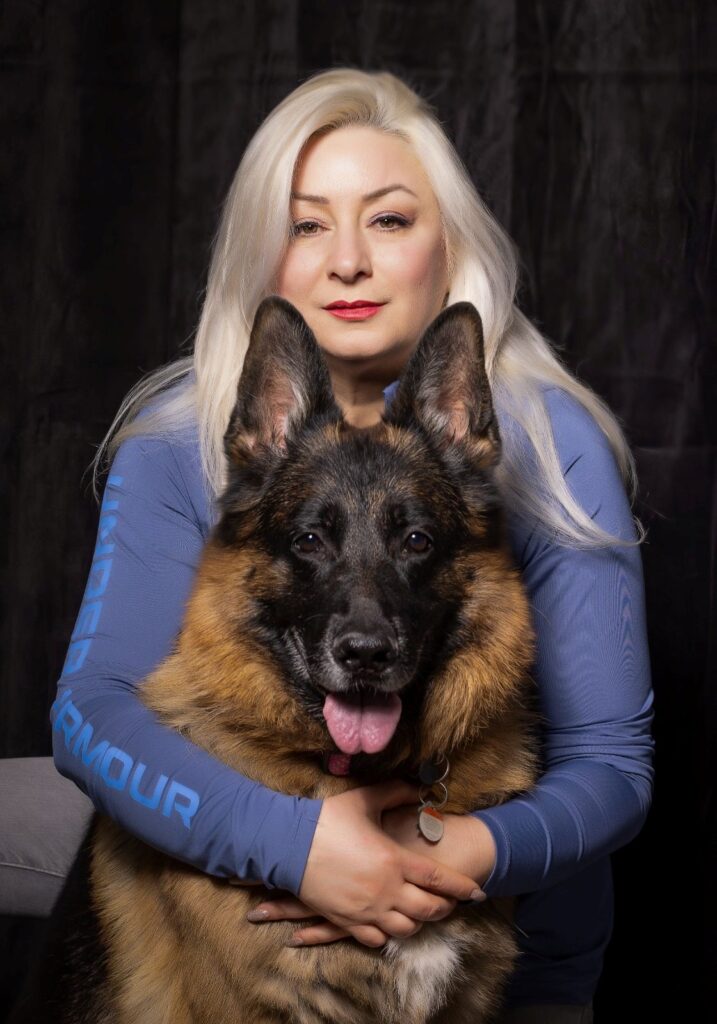
Dog Training
(Basic & Advanced)
Puppy Classes
Eliminate Behavioral Disorder
The Behavior Of Dog Technologist

Dog Sitting
Send us a Message
Feel free to ask any questions over the phone, or get in touch via our contact form below. Your message will be dispatched directly to our staff who will answer as soon as they can.